
I still remember the first time my grandmother taught me that the best dressings aren’t always store-bought—they’re made with intention, right in your own kitchen. This chipotle ranch dressing has become my go-to for everything from simple green salads to topping filled hamburgers and drizzling over easy chilaquiles. It’s creamy, it’s smoky, and it transforms ordinary meals into something memorable.
A Family Kitchen Discovery
Growing up in my mother’s California kitchen, I learned that ranch dressing was more than just a condiment—it was a canvas. My mom would experiment with fresh herbs from our garden, and Grandma would shake her head with a knowing smile, understanding that good food comes from being willing to try something new. This chipotle ranch is my modern twist on that legacy, blending the cool creaminess of a classic ranch with the warm, smoky heat of chipotle peppers.
I developed this recipe during one of those late-summer California afternoons when I was meal prepping for the week ahead. I wanted something that would work for nearly every meal—breakfast, lunch, dinner, snacks. What emerged was this beautiful, versatile dressing that my family now requests by name.
What is Chipotle Ranch Dressing?
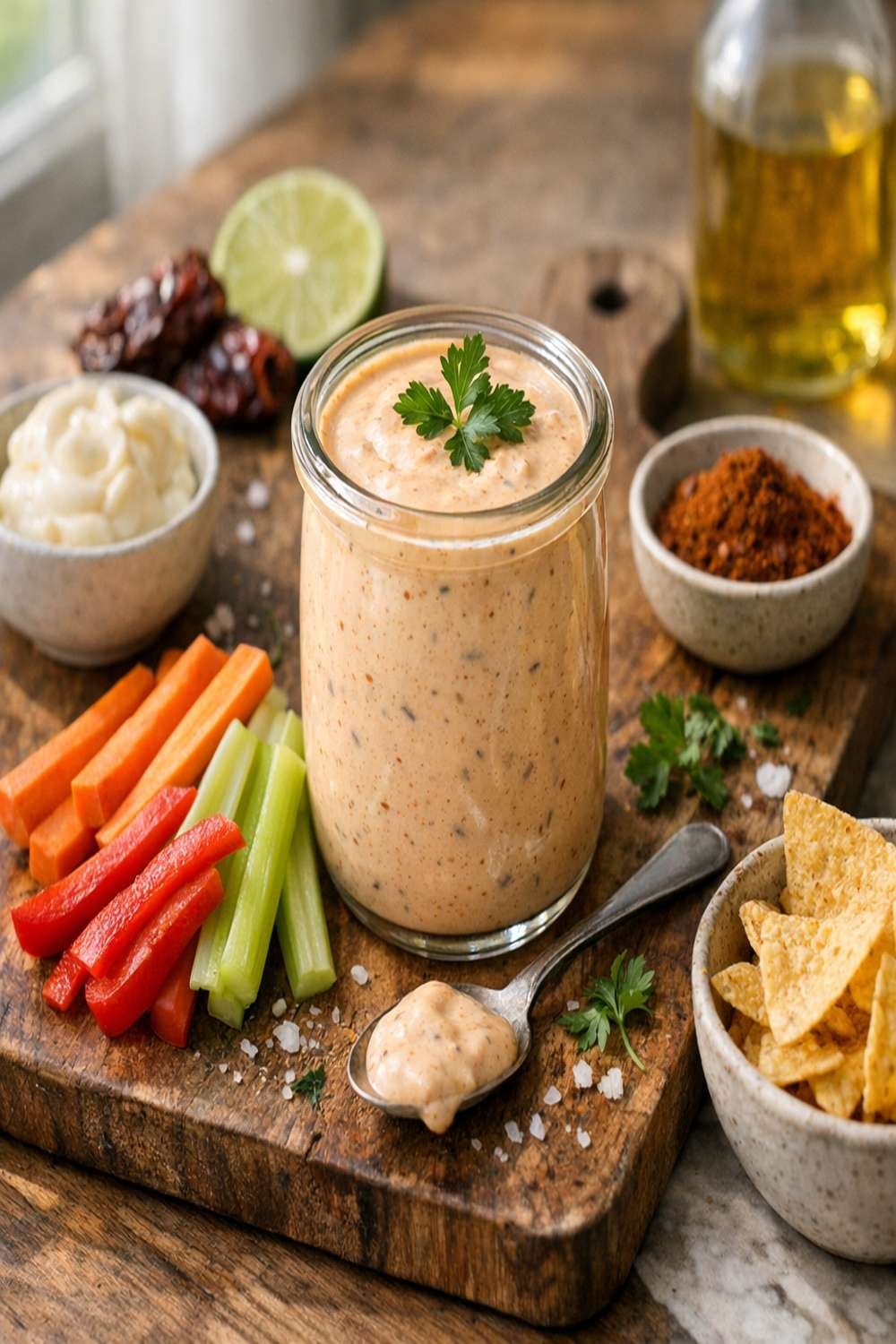
Chipotle ranch dressing is a contemporary reimagining of the beloved ranch formula, infused with the deep, smoky flavors of chipotle peppers. Unlike traditional ranch, which relies on buttermilk and herbs for its character, this version combines a creamy base with roasted, smoked peppers that add complexity and a gentle heat.
Chipotle peppers in adobo sauce—those wonderful smoked jalapeños packed in a tangy, spiced tomato sauce—are the star here. They give this dressing a restaurant-quality depth that you simply can’t achieve with basic seasonings. The result is a dressing that’s sophisticated enough for entertaining yet simple enough for busy weeknight dinners.
This isn’t a heavy, overwhelming heat either. The creaminess of the sour cream and the brightness of lime juice balance the smokiness perfectly, creating something that feels both comforting and exciting on the same plate.
Why You’ll Love This Chipotle Ranch Dressing Recipe
- Versatility that matters – Whether you’re dressing a salad, dipping vegetables, topping tacos, or drizzling over grilled chicken, this dressing adapts beautifully to nearly any application. I’ve even used it as a base for grain bowls and roasted vegetable platters.
- Restaurant-quality flavor at home – The smoky depth of chipotle peppers creates a complexity that tastes like it came from a professional kitchen, yet it takes just minutes to prepare. This is the kind of recipe that makes your everyday meals feel special.
- Made with real ingredients – As a registered dietitian, I’m passionate about knowing what goes into the foods we eat. This dressing contains no artificial flavors, no mysterious stabilizers, and nothing you can’t pronounce. Everything here is real food.
- Budget-friendly and practical – High-quality dressings at farmer’s markets and specialty shops can cost $8-12 per jar. This recipe yields about 1½ cups for just a few dollars, and it actually tastes better than most commercial versions.
- Make-ahead friendly – Prepare it at the beginning of your week and keep it in the refrigerator. It’s perfect for busy families who want healthy, flavorful meals without last-minute stress.
The Ingredients
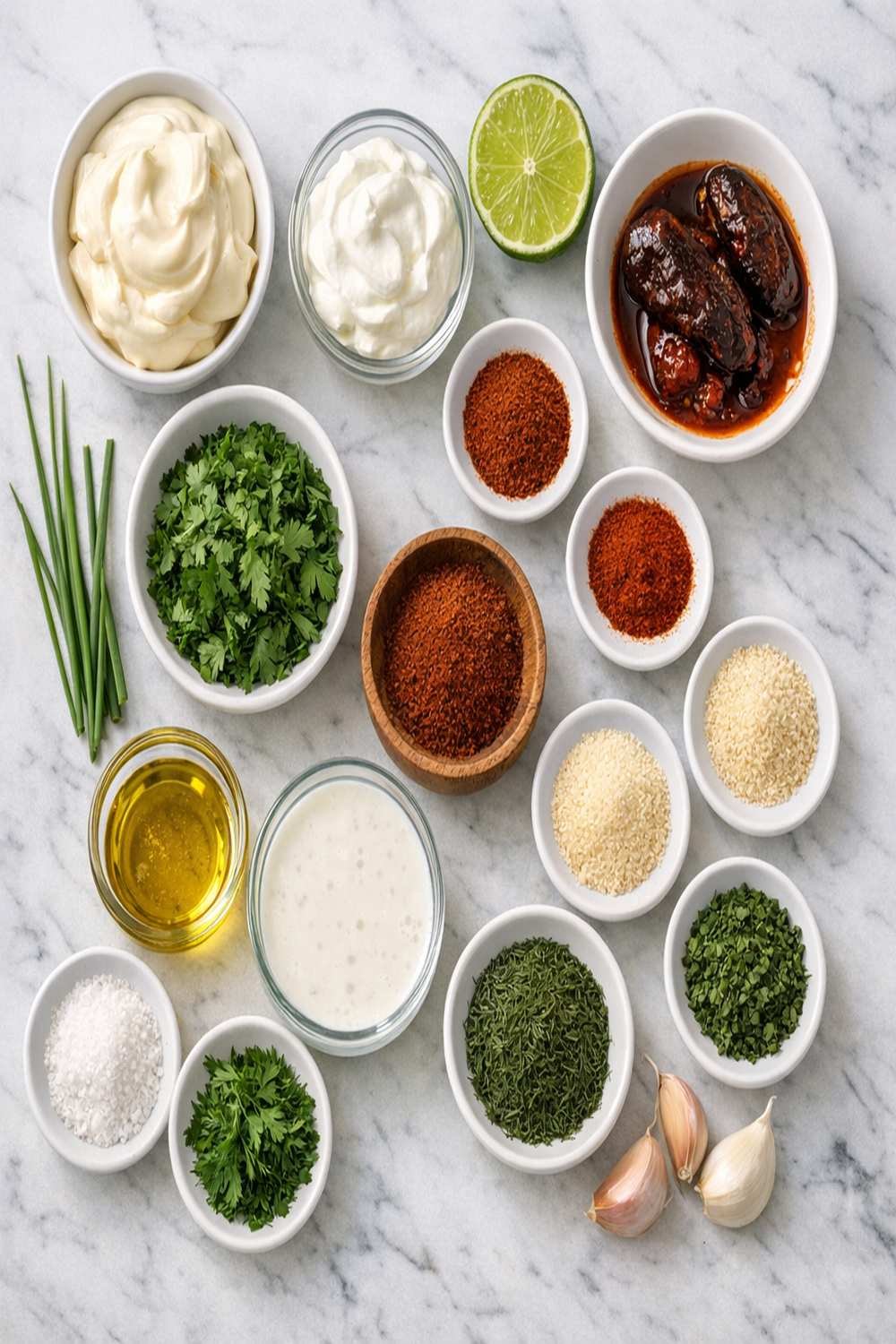
Let me walk you through what makes this dressing work. Each ingredient serves a purpose, and together they create something greater than their individual parts. This recipe yields approximately 1½ cups of dressing, which will keep you well-stocked for several days of meals.
- ½ teaspoon smoked paprika (optional but highly recommended for extra smokiness)
- ¾ cup mayonnaise (creates a silky texture and helps bind flavors together)
- 1 teaspoon onion powder (creates an underlying sweetness and umami richness)
- ¼ teaspoon sea salt (enhances all the other flavors and brings them into focus)
- 3 chipotle peppers in adobo sauce (the soul of this dressing, providing smokiness and gentle heat)
- 8 ounces sour cream (the foundation for creamy richness and tangy brightness)
- 1½ teaspoons garlic powder (adds savory depth without overpowering the chipotle)
- 1½ tablespoons fresh lime juice (brightens everything and balances the smokiness)
- ⅛ teaspoon cayenne pepper (a whisper of additional heat, allowing you to control the spice level)
- 1 teaspoon dried dill (brings an herbaceous note that makes ranch taste like home)
How to Make Chipotle Ranch Dressing?
This dressing comes together with remarkable ease—no cooking required, just a few minutes of preparation. I recommend using a food processor for the smoothest texture, though a blender works beautifully as well. The key is blending thoroughly so the chipotle peppers fully integrate into the creamy base.
Step 1: Gather and Measure Your Ingredients
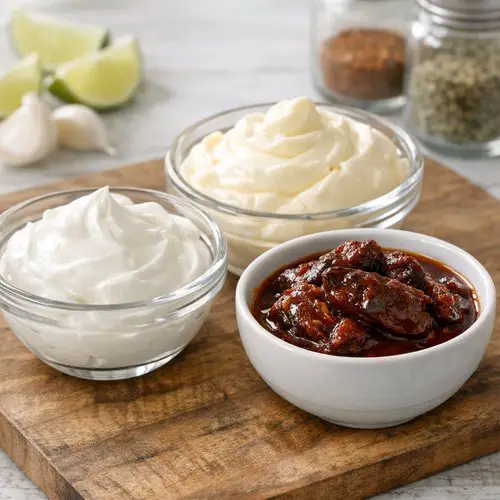
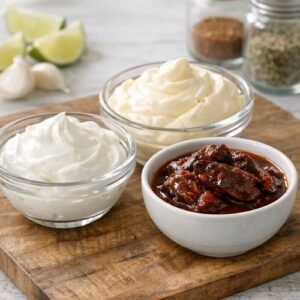
Begin by measuring out your sour cream, mayonnaise, and the chipotle peppers with their adobo sauce. Having everything ready before you start is what we call mise en place in the culinary world—it ensures you won’t forget anything and the process moves smoothly. Remove the chipotle peppers from their can using a slotted spoon or fork, reserving about 1 tablespoon of the adobo sauce to add for extra depth.
Step 2: Combine the Creamy Base
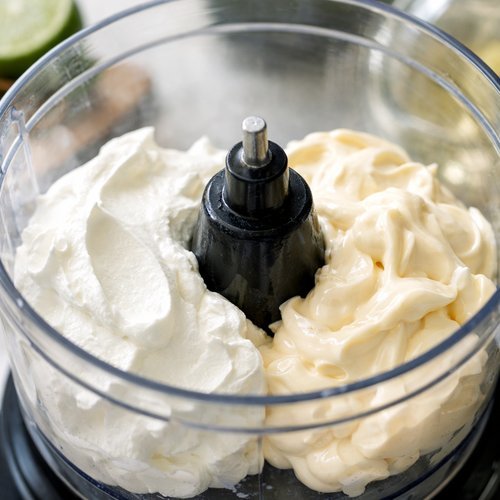
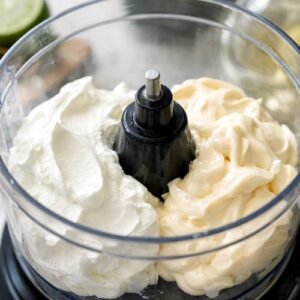
Add the sour cream and mayonnaise to your food processor or blender bowl. These two ingredients create the foundation of your dressing. The sour cream brings tangy brightness and a lighter texture, while the mayonnaise contributes creaminess and acts as an emulsifier to keep everything bound together smoothly. Pulse gently two or three times to combine—you’re not aiming for perfectly smooth yet, just integrated enough to accept the next ingredients.
Step 3: Add the Chipotle Peppers and Reserved Sauce
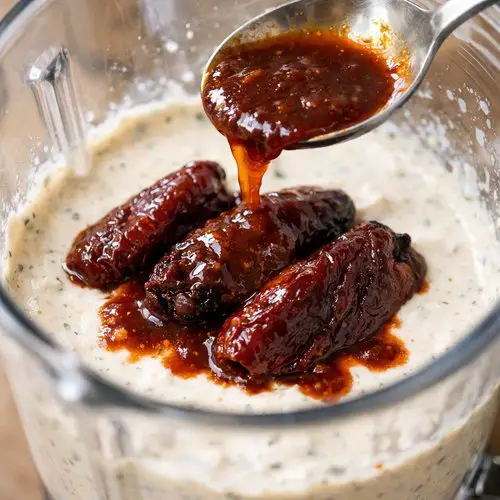
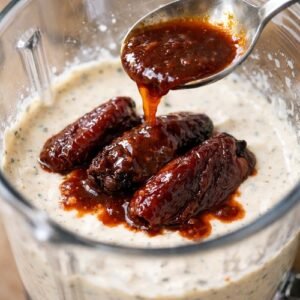
Carefully add the three chipotle peppers and about 1 tablespoon of the reserved adobo sauce directly into the creamy mixture. This is where the magic begins. Don’t be intimidated by the peppers themselves—they’ll break down completely during blending, creating an even distribution of flavor throughout the dressing rather than chunks of pepper that can surprise you unexpectedly.
Step 4: Blend Until Completely Smooth
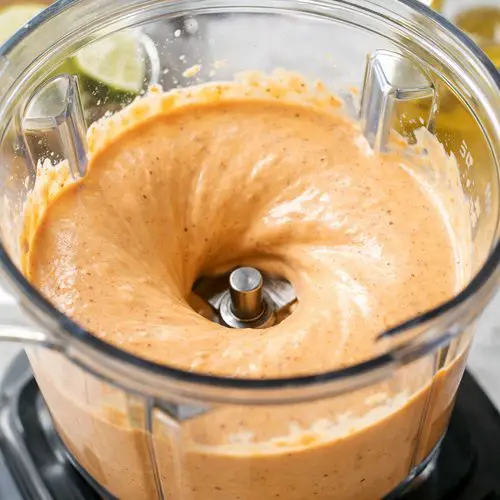
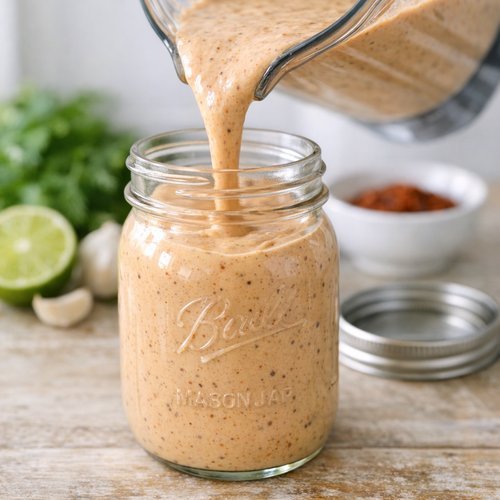
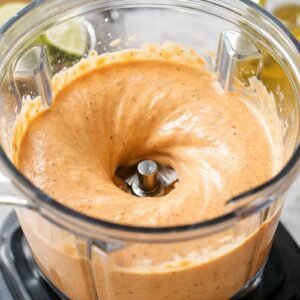
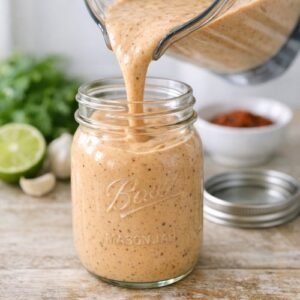
Pulse the mixture several times, then blend on medium speed for about 1-2 minutes until the texture is completely smooth and uniform. The chipotle peppers should fully disappear into the cream base, creating a beautiful peachy-rose color. Stop occasionally and scrape down the sides of the processor bowl with a spatula to ensure nothing hides at the bottom. The dressing should look creamy and homogeneous with no visible pepper chunks remaining.
Step 5: Incorporate the Seasonings and Lime Juice
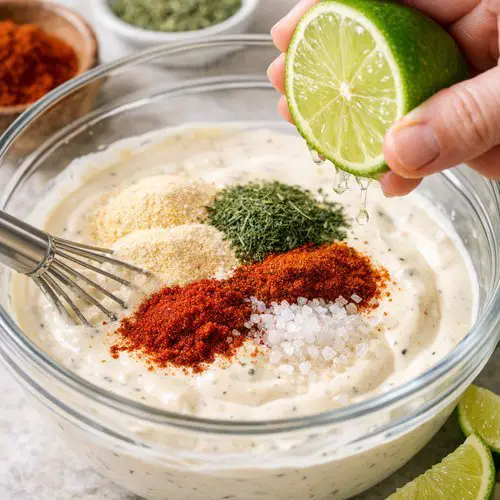
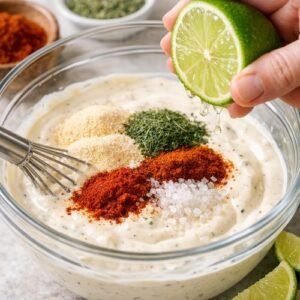
Add the garlic powder, onion powder, dried dill, smoked paprika, cayenne pepper, and sea salt. Squeeze the fresh lime juice directly into the mixture—if possible, use a lime that’s at room temperature, as it yields more juice. Pulse everything together for another 30-45 seconds until the seasonings are fully integrated and you can’t see any visible specs of garlic or onion powder floating around.
Step 6: Taste and Adjust
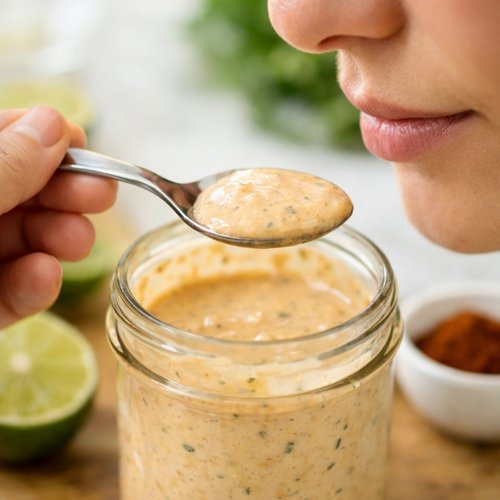
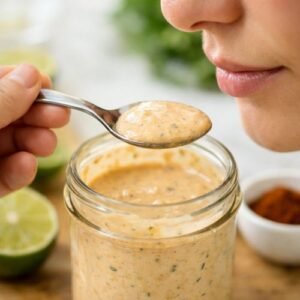
This is your moment to make the dressing your own. Dip a clean spoon into the dressing and taste it thoughtfully. Does it need more lime brightness? Add a few more drops. Does it need more heat? Incorporate another pinch of cayenne. Does it taste a bit flat? A tiny adjustment to the salt can work wonders. I often add an extra ¼ teaspoon of smoked paprika if I’m serving it to guests who particularly love deep, complex flavors.
Step 7: Transfer and Store
Pour your finished chipotle ranch dressing into a clean glass jar or airtight container. I prefer glass mason jars because you can see exactly how much dressing remains and they last forever in your kitchen. Give everything a final stir to ensure the flavors are completely combined, then seal tightly.
Tips and Tricks
- Control your heat level – If you’re cooking for people who are sensitive to spice, start with just 2 chipotle peppers and add the third after tasting. The beauty of homemade dressing is that you can customize it perfectly for your family’s preferences.
- Use quality sour cream – The tanginess and creaminess of your base ingredients matter tremendously. Full-fat sour cream creates a richer, more luxurious texture than reduced-fat versions, and the flavor difference is noticeable.
- Fresh lime is non-negotiable – Bottled lime juice has a different flavor profile and won’t provide the same brightness and complexity. The few seconds it takes to squeeze a fresh lime makes a meaningful difference in the final result.
- Don’t skip the adobo sauce – Many recipes instruct you to discard the sauce the chipotles come in, but that’s where so much flavor lives. Those spiced tomatoes are liquid gold for your dressing.
- Blend thoroughly for best texture – Underblending leaves small pepper chunks that can create surprising bursts of heat. Thorough blending creates an even, creamy distribution of flavor.
- Make it thinner if needed – If your dressing seems too thick for your intended use, thin it with a tablespoon at a time of Greek yogurt or a splash of buttermilk to maintain the creamy texture.
Expert’s Nutritional Insight
From my years working in nutrition, I’ve learned that not all fats are created equal—and that’s important here. The sour cream and mayonnaise in this dressing contain conjugated linoleic acid and other beneficial fatty acids that your body actually uses efficiently. The chipotle peppers add capsaicin, a compound with anti-inflammatory properties that research from the American Journal of Clinical Nutrition has shown may support healthy metabolic function.
More importantly, because this dressing is so flavorful, you use less of it than you would with a bland, store-bought version. One person in my family might use three tablespoons of a flavorless dressing to achieve taste satisfaction, whereas they’d use just two tablespoons of this one. That’s meaningful calorie and fat reduction that happens naturally when food tastes genuinely good.
Common Mistakes to Avoid
- Over-blending until it breaks – While you want smooth texture, if you blend excessively, the emulsion can begin to separate slightly. 1-2 minutes of blending is perfect; anything beyond that is unnecessary.
- Forgetting to taste before storing – Seasoning preferences are personal and cultural. What tastes perfect to me might need adjustment for you. Always taste and adjust before transferring to your storage container.
- Using dried lime juice instead of fresh – This completely changes the flavor profile. Fresh lime brings brightness; bottled brings a dull, metallic note. It’s truly worth the small effort.
- Mixing in the adobo sauce carelessly – Some of that sauce contains seeds and small pepper pieces that can create unexpected spice bursts. Either strain it lightly before adding or blend extra thoroughly to break everything down completely.
Can I Store Chipotle Ranch Dressing?
Absolutely, and this is one of the reasons I love making dressing at home. Pour your finished dressing into a clean glass jar or airtight container and refrigerate immediately. This dressing keeps beautifully for up to 10 days when stored properly, though I find it tastes most vibrant within the first week.
The flavors actually develop and deepen over the first 24 hours as the ingredients meld together, so if you have time, making this dressing a day ahead of when you plan to use it is ideal. I often prepare it on Sunday for the week ahead, and by Wednesday when I use it, the flavors are even more harmonious than they were fresh.
Make sure your storage container is completely clean and airtight to prevent contamination and moisture loss. Glass mason jars are my preference because they’re durable, affordable, and allow you to see exactly how much dressing remains without opening the lid.
Nutrition Information
Based on USDA nutritional database analysis, each 2-tablespoon serving contains approximately 180 calories, 18 grams of fat, 2 grams of carbohydrates, and less than 1 gram of protein. The fat content is primarily from the mayonnaise and sour cream base, with beneficial unsaturated fats comprising about 65% of the total fat content.
This dressing is essentially carbohydrate-free, making it suitable for various dietary approaches. The sodium content is approximately 200 milligrams per serving, which is reasonable given that many commercial ranch dressings contain 300-400 milligrams per serving. If you’re watching sodium intake, you can reduce the sea salt to ⅛ teaspoon without significantly impacting flavor.
The chipotle peppers contribute vitamins A and C, plus the beneficial compounds I mentioned earlier. The lime juice adds additional vitamin C, supporting immune function and collagen production. This isn’t just a delicious dressing—it’s one with nutritional integrity.
What Can I Serve With Chipotle Ranch Dressing?
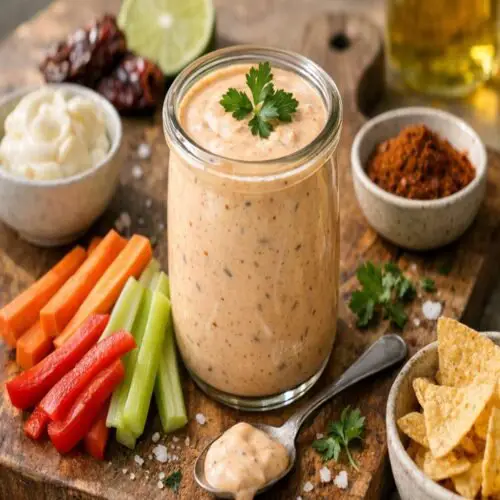
This dressing is wonderfully versatile, which is exactly why I developed it. The smoky heat pairs beautifully with everything from simple greens to grilled proteins. Try it with beer battered shrimp tacos for a coastal California vibe, or use it as a dip alongside potato rings for a comforting side dish experience.
- Green salads – Romaine, spinach, mixed greens, or arugula all benefit from this dressing’s smokiness. Add grilled chicken, beans, corn, and avocado for a complete meal.
- Raw vegetable platters – Serve alongside bell peppers, cucumber slices, cherry tomatoes, celery, and radishes. This dressing transforms crudités from boring to exciting.
- Tacos and burrito bowls – Drizzle this over seasoned ground turkey or shredded chicken, then add rice, beans, lettuce, and toppings. The smoky heat complements Latin-inspired flavors beautifully.
- Grilled vegetables – Use as a dip for grilled zucchini, eggplant, asparagus, or portobello mushrooms fresh off the barbecue.
- Baked sweet potatoes – Dollop onto warm, split sweet potatoes alongside black beans and roasted corn for a vegetarian main course.
- Grilled chicken or fish – Serve alongside grilled proteins as a sauce rather than a dressing. A small spoonful adds incredible flavor without overwhelming delicate fish.
- Grain and bowl meals – Drizzle over Buddha bowls containing quinoa, roasted vegetables, chickpeas, and fresh herbs.
- Quesadillas and sandwiches – Use as a spread on the outside of a quesadilla before pan-frying, or serve alongside turkey and avocado sandwiches.
Make-Ahead Guide
From a practical standpoint, this is one of my favorite recipes because it actually improves with time. Make this at the beginning of your week—Sunday evening works perfectly—and you’ll have flavorful dressing ready for every meal through Thursday or Friday.
Monday preparation: Make the full recipe and transfer to a glass jar. The dressing will be good immediately, but the flavors are still somewhat separated.
Tuesday onward: By Tuesday, the garlic powder, onion powder, and dill have fully hydrated and distributed throughout the creamy base. The lime juice brightness has softened slightly and integrated beautifully with the smoky chipotle. This is when the dressing tastes most refined.
Portioning tip: If you know you’ll use the dressing throughout the week, divide it into two containers on Sunday—one that lives in the front of your refrigerator for easy access, and one that stays toward the back. This prevents opening and closing the main container repeatedly, which can introduce air and bacteria.
Texture maintenance: As the dressing sits, it may thicken slightly as ingredients fully hydrate. If it becomes thicker than you prefer, simply stir in a tablespoon of Greek yogurt or buttermilk to restore the original consistency. Never add water, as it dilutes the flavor.
Seasonal Variations
I love adapting recipes to reflect what’s available and what my family needs seasonally. Here are my favorite ways to evolve this dressing:
Spring: Add fresh cilantro (2-3 tablespoons chopped fresh cilantro added during the final blending step) and reduce dried dill to ½ teaspoon. This lighter, fresher variation pairs beautifully with spring salads featuring fresh peas, asparagus, and tender greens.
Summer: Add fresh corn (puree ⅓ cup fresh corn kernels and blend thoroughly). This creates a subtle sweetness that complements grilled vegetables and fish. It’s gorgeous served at summer barbecues.
Fall: Increase the smoked paprika to 1 teaspoon and add ¼ teaspoon cumin. This warming spice variation pairs wonderfully with roasted root vegetables and hearty grains.
Winter: Add 1 tablespoon of fresh rosemary (minced very finely) and a pinch of black pepper. The herbal quality feels more substantial and pairs beautifully with warm grain bowls and roasted winter squash.
Substitutes and Modifications
- Greek yogurt instead of sour cream – Use 8 ounces plain, full-fat Greek yogurt in place of the sour cream. This increases protein slightly and reduces fat, though you lose some of the tangy brightness. The texture remains creamy and luxurious.
- Avocado mayo for traditional mayo – If you prefer oil made from avocados, use this in place of traditional mayonnaise. It creates a slightly earthier flavor and adds beneficial monounsaturated fats, though it costs more.
- Fresh cilantro instead of dill – Some families prefer the brighter, more herbaceous quality of cilantro over dill. Use the same measurement—1 teaspoon of chopped fresh cilantro works beautifully, though fresh herbs are less concentrated than dried, so you might increase to 1½ teaspoons.
- Lime juice replaced with lemon – If limes aren’t available, fresh lemon juice works, though the flavor is slightly more tart and less tropical. Use the same measurement.
- Reduce heat with roasted poblano – If chipotle peppers feel too intense for your family, replace one of the three chipotles with a roasted and peeled poblano pepper. This maintains smokiness with reduced heat.
- Smoked paprika for additional smokiness – If you want to deepen the smoky quality without increasing heat, increase smoked paprika to ¾ teaspoon and reduce cayenne to just a pinch.
Chipotle Ranch Dressing Recipe

Ingredients
- ½ teaspoon smoked paprika optional but highly recommended for extra smokiness
- ¾ cup mayonnaise creates a silky texture and helps bind flavors together
- 1 teaspoon onion powder creates an underlying sweetness and umami richness
- ¼ teaspoon sea salt enhances all the other flavors and brings them into focus
- 3 chipotle peppers in adobo sauce the soul of this dressing, providing smokiness and gentle heat
- 8 ounce sour cream the foundation for creamy richness and tangy brightness
- 1½ teaspoon garlic powder adds savory depth without overpowering the chipotle
- 1½ tablespoon fresh lime juice brightens everything and balances the smokiness
- ⅛ teaspoon cayenne pepper a whisper of additional heat, allowing you to control the spice level
- 1 teaspoon dried dill brings an herbaceous note that makes ranch taste like home
Instructions
Step 1: Gather and Measure Your Ingredients
- Begin by measuring out your sour cream, mayonnaise, and the chipotle peppers with their adobo sauce. Having everything ready before you start is what we call mise en place in the culinary world—it ensures you won't forget anything and the process moves smoothly. Remove the chipotle peppers from their can using a slotted spoon or fork, reserving about 1 tablespoon of the adobo sauce to add for extra depth.
Step 2: Combine the Creamy Base
- Add the sour cream and mayonnaise to your food processor or blender bowl. These two ingredients create the foundation of your dressing. The sour cream brings tangy brightness and a lighter texture, while the mayonnaise contributes creaminess and acts as an emulsifier to keep everything bound together smoothly. Pulse gently two or three times to combine—you're not aiming for perfectly smooth yet, just integrated enough to accept the next ingredients.
Step 3: Add the Chipotle Peppers and Reserved Sauce
- Carefully add the three chipotle peppers and about 1 tablespoon of the reserved adobo sauce directly into the creamy mixture. This is where the magic begins. Don't be intimidated by the peppers themselves—they'll break down completely during blending, creating an even distribution of flavor throughout the dressing rather than chunks of pepper that can surprise you unexpectedly.
Step 4: Blend Until Completely Smooth
- Pulse the mixture several times, then blend on medium speed for about 1-2 minutes until the texture is completely smooth and uniform. The chipotle peppers should fully disappear into the cream base, creating a beautiful peachy-rose color. Stop occasionally and scrape down the sides of the processor bowl with a spatula to ensure nothing hides at the bottom. The dressing should look creamy and homogeneous with no visible pepper chunks remaining.
Step 5: Incorporate the Seasonings and Lime Juice
- Add the garlic powder, onion powder, dried dill, smoked paprika, cayenne pepper, and sea salt. Squeeze the fresh lime juice directly into the mixture—if possible, use a lime that's at room temperature, as it yields more juice. Pulse everything together for another 30-45 seconds until the seasonings are fully integrated and you can't see any visible specs of garlic or onion powder floating around.
Step 6: Taste and Adjust
- This is your moment to make the dressing your own. Dip a clean spoon into the dressing and taste it thoughtfully. Does it need more lime brightness? Add a few more drops. Does it need more heat? Incorporate another pinch of cayenne. Does it taste a bit flat? A tiny adjustment to the salt can work wonders. I often add an extra ¼ teaspoon of smoked paprika if I'm serving it to guests who particularly love deep, complex flavors.
Step 7: Transfer and Store
- Pour your finished chipotle ranch dressing into a clean glass jar or airtight container. I prefer glass mason jars because you can see exactly how much dressing remains and they last forever in your kitchen. Give everything a final stir to ensure the flavors are completely combined, then seal tightly.
Notes
Nutrition
FAQs
Can I make this dressing without a food processor or blender?
You can, though the texture won’t be quite as smooth. Finely mince the chipotle peppers by hand using a sharp knife, then whisk all ingredients together vigorously in a bowl for several minutes. The dressing will work and taste delicious, but you might notice tiny flecks of pepper rather than complete smoothness. For the best experience, even an immersion blender (the handheld kind) works wonderfully and takes up minimal space.
What’s the difference between my homemade version and store-bought chipotle ranch?
Store-bought versions often contain added sugars, modified corn starch for thickening, sodium benzoate or potassium sorbate as preservatives, and sometimes artificial flavoring compounds. They’re also typically thinner and less creamy. Your homemade version contains only real ingredients, tastes more vibrant, and costs a fraction of the price. The flavor difference is genuinely noticeable—you’ll wonder why you ever bought bottled dressing.
Is this dressing suitable for people following low-carb or keto diets?
Absolutely. Each serving contains less than 1 gram of carbohydrates, making it very compatible with low-carb and ketogenic eating patterns. The fat content, primarily from mayonnaise and sour cream, supports satiety and fits well within these dietary approaches. It’s actually one of my favorite dressings to recommend to clients managing blood sugar or following specific macronutrient ratios.
Can I freeze this dressing for later?
I don’t recommend freezing because the texture becomes grainy and separated after thawing, even if it technically hasn’t spoiled. The emulsion breaks, and you’d need to re-blend it to restore consistency. Since this dressing keeps beautifully in the refrigerator for up to 10 days, freezing isn’t necessary.
How do I use up the remaining adobo sauce from the can?
The remaining adobo sauce (after you’ve removed three peppers) is liquid gold. Store it in a small jar and use it to marinate chicken, blend into soups, stir into bean dips, or drizzle onto roasted vegetables. I also keep it on hand for making quick taco meat or adding to scrambled eggs for breakfast.
What if my dressing seems too thick?
Simply whisk in a tablespoon at a time of buttermilk, Greek yogurt, or even whole milk until you achieve your desired consistency. Taste after each addition because you don’t want to dilute the flavor. I typically prefer my dressing to coat a spoon lightly rather than be pourable, so adjust to your personal preference.
Can I make this dressing without the lime juice?
Lime juice is really important for brightness, but if you truly don’t have it available, fresh lemon juice works as a substitute at the same measurement. The flavor will be slightly different—more tart, less tropical—but the dressing will still be delicious. I wouldn’t recommend omitting it entirely, as it balances the richness and smokiness beautifully.
More Recipes You’ll Love
- Jollibee Mayonnaise Recipe – Explore another creamy condiment that adds authentic flavor to your favorite meals and brings a taste of comfort food into your kitchen.
- Fancy Salsa – Pair your chipotle ranch with fresh, vibrant salsa for a complete dipping and condiment experience that brings brightness to any table.
- Masago Sauce Recipe – Discover another versatile sauce that combines creamy richness with unexpected flavor layers for the adventurous home cook.
I hope this chipotle ranch dressing becomes as much a part of your kitchen routine as it has become in mine. What started as an experiment one summer afternoon has transformed into something my family requests regularly, something I make without thinking, and something that genuinely elevates whatever meal it graces. That’s the power of good homemade food—it doesn’t require complicated techniques or hard-to-find ingredients, just intention and a willingness to try something a little bit different.
The next time you’re standing in the refrigerated section of the grocery store, staring at expensive bottles of store-bought dressing, remember that everything you need to make something better is already sitting in your kitchen. Your family deserves food that tastes like love, and this dressing absolutely delivers that.
Happy Cooking! With love, Tina Cooper.